
What Is Neuroathletics?
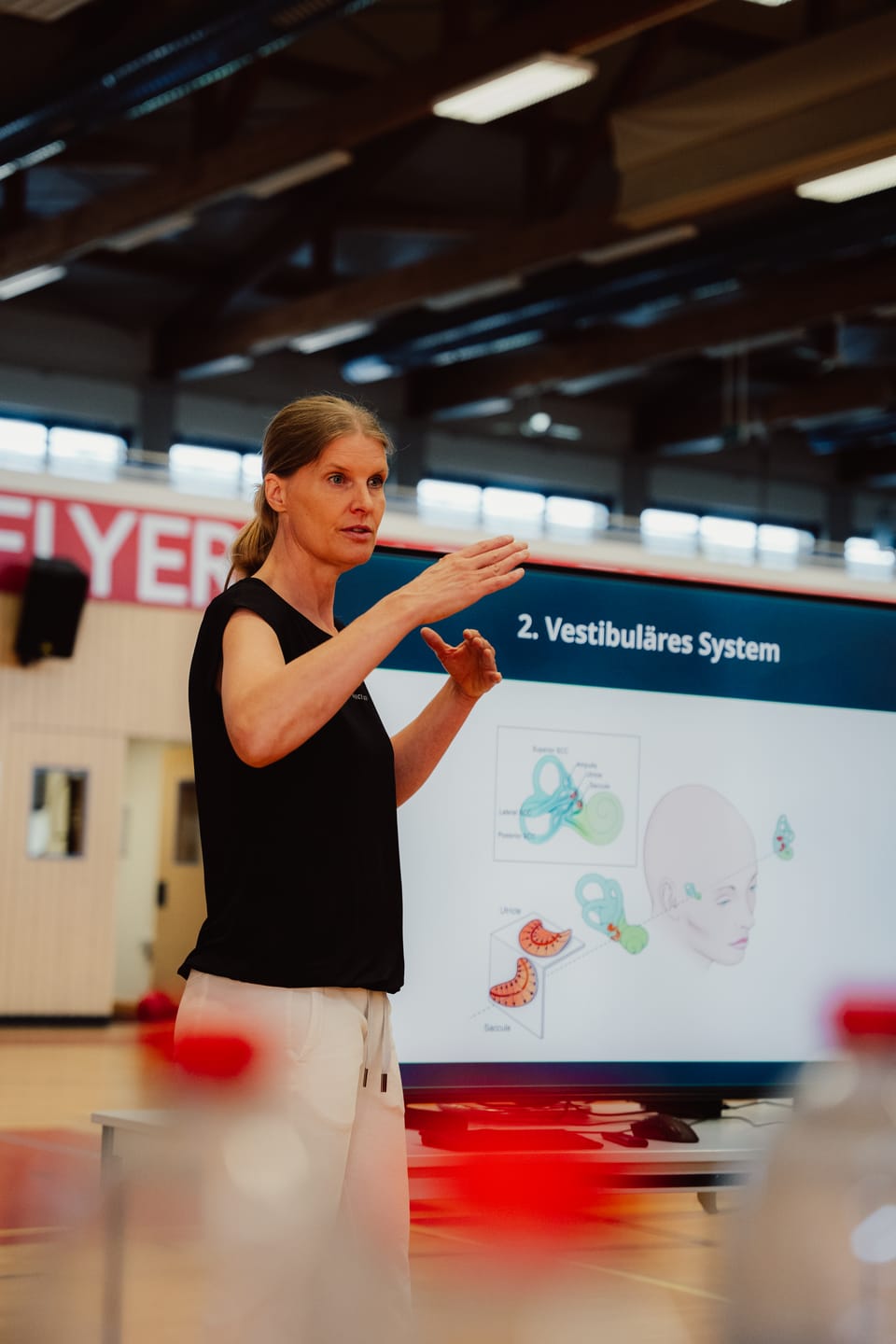
Neuroathletics is an innovative approach that focuses on improving performance through targeted training of the nervous system.
This approach emphasises the close interconnection of the three movement-controlling systems – the visual, vestibular and proprioceptive systems – and their influence on motor control and overall performance.
The three movement-controlling systems
Visual system
The visual system is crucial for spatial perception and the processing of movement. Optimal visual function enables athletes to perceive their surroundings better and to react more quickly to changes.
Vestibular system
This system plays a central role in balance and spatial orientation. It helps the body to remain stable while moving through space.
A disorder of the vestibular system can impair the ability to maintain balance, which reduces performance.
Proprioceptive system
Proprioception refers to the ability to perceive the position and movement of one's own body in space. This system is crucial for fine motor skills and coordination.
A well-developed proprioceptive system enables athletes to control and adjust their movements precisely.
Overall, neuroathletics aims to maximise performance through targeted stimulation and improvement of these three systems. When these systems work well, compensations that lead to reduced performance and an increased risk of injury are avoided.
Conscious movement and reflexive stability
In neuroathletics, a distinction is made between conscious movement and reflexive stability, as the two involve different neurological processes and functions in the body.
Conscious movement
Conscious movements are those that are performed voluntarily and in a controlled manner. This means that the athlete or person deliberately initiates and controls the movement. The cortex, the basal ganglia and the cerebellum are actively involved in planning and executing it.
Examples include targeted sporting movements such as a jump shot in basketball or lifting a weight. The athlete is consciously focused on what the body is doing and controls the movement sequences.
In neuroathletics, the focus is on making such movements more precise and efficient by optimising the neural connections in the brain and nervous system.
Reflexive stability
Reflexive stability, on the other hand, refers to the body's ability to generate stability unconsciously and automatically. Here the PMRF (brainstem) plays a key role (pons, medulla, reticular formation).
An example of reflexive stability is keeping one's balance when suddenly knocked off balance or during rapid changes of direction. This stabilisation takes place without the athlete consciously thinking about it – it is an automatic response of the nervous system.
In neuroathletics, this stability is trained through targeted exercises that stimulate the brain to automate fast and efficient stabilisation processes.
Test and retest
Targeted tests and retests (assessments) make it possible to check the effectiveness of neuroathletic exercises quickly and easily.
This not only increases the athlete's motivation and compliance, but also optimises the efficiency of each exercise by making progress immediately visible.